
Living Trust vs Will in California: Which Do You Need?
Educational guide for California homeowners and parents. This article explains how wills and revocable living trusts typically differ under California practice. It is not legal advice. Your situation depends on your assets, family, and goals—talk with a California estate planning attorney before you decide.
As of: September 27, 2026 (PT). Small-estate dollar limits change periodically; always confirm current figures on the California Courts Self-Help site and Judicial Council form DE-300.
At a glance
- A will directs probate assets after death, but it does not usually keep a solely owned California home out of probate by itself.
- A revocable living trust controls only the assets placed in it. Signing the trust does not retitle a deed or account.
- Many California plans use both a funded living trust and a pour-over will, plus separate incapacity documents.
- A successor trustee can often manage trust assets during incapacity and administer funded trust assets after death without a full probate for those assets.
- California has simplified transfer procedures, but eligibility, dollar limits, waiting periods, and court requirements depend on the asset and date of death.
- Retirement accounts, insurance, joint ownership, and beneficiary-designated assets require separate coordination with the broader plan.
- The right structure depends on title, family circumstances, assets, and goals—not a one-size-fits-all rule.

On this page
- At a glance
- Quick answer: how wills and living trusts differ in California
- Does a will avoid probate in California?
- Do you need a living trust if you own a California home?
- Pour-over wills and why they still matter with a trust
- Incapacity planning: wills vs trusts (and companion documents)
- Who typically benefits from a funded living trust vs a will-only plan
- Common myths
- How CBM helps you choose and implement
- FAQs
- Next step
Quick answer: how wills and living trusts differ in California
In California, a will and a revocable living trust both can say who should receive property after you die—but they work differently during life, after death, and in court.
- A will generally directs how probate assets are distributed after death. It usually does not move those assets outside the court process called probate.
- A revocable living trust holds title to assets you transfer into it (funding). While you are alive and able, you typically control those assets. If you become unable to manage them, a successor trustee you named can often step in. After death, assets that were properly titled in the trust can often be administered without a full probate for those assets.
- Many California plans use both: a funded living trust as the main vehicle, plus a pour-over will as a safety net for anything left outside the trust—and companion documents for incapacity (durable power of attorney and advance health care directive).
What a will does (and does not do)
A will is a legal document that states your wishes about property after you die and can nominate an executor (personal representative) and, where appropriate, a guardian for minor children. California Courts Self-Help describes a will as a document that says how you want your property distributed when you die. See Wills, estates, and advance care planning.
A will generally:
- Can name who inherits probate assets and who should serve as executor.
- Can nominate a guardian for minor children (subject to court oversight).
- Takes effect at death—not during life.
A will generally does not:
- Avoid probate by itself for assets that must pass under the will through court administration.
- Authorize someone to manage your finances or home if you are alive but incapacitated.
- Keep the details of your estate private once a probate case is opened (probate filings are typically part of a public court file).
What a revocable living trust does during life and after death
A revocable living trust is an arrangement you create during life. You (often as initial trustee) manage trust assets for your benefit. You name a successor trustee to take over if you resign, become unable to serve, or die. California Courts Self-Help notes that when assets are put into the trust, they can often go to the beneficiaries without having to go through probate court for those assets. In CBM’s educational framing: a properly funded revocable living trust may help keep properly funded trust assets out of probate. See the same Self-Help guide.
In plain terms, a funded revocable living trust can help with:
- During life: You usually keep control and can revoke or amend the trust (subject to the trust’s terms).
- If you cannot manage affairs: A successor trustee may manage trust assets without waiting for a will to “kick in” (a will does nothing until death). Non-trust assets still need other tools (for example, a durable power of attorney).
- After death: The successor trustee can typically administer and distribute trust-titled assets under the trust instrument, often without a full probate for those assets.
- Privacy: Trust administration is generally handled privately, unless a dispute or other circumstance brings matters into court.
Important: Think of a trust like a safe. Signing the trust documents builds the safe. Funding (retitling assets into the trust) is what puts the valuables inside. Until assets are funded, an unfunded trust is like an empty safe—or just paper. Assets left in your individual name may still need a probate or other transfer process. CBM helps Private Clients with funding after signing. See how to fund a California living trust and trust funding.
Side-by-side comparison (qualitative)
| Topic | Will (alone) | Funded revocable living trust |
|---|---|---|
| When it mainly operates | After death | During life, at incapacity (for trust assets), and after death |
| Probate for titled assets | Assets that must pass under the will through administration generally go through probate (subject to limited exceptions / simplified procedures) | Assets properly titled in the trust can often be administered without a full probate for those assets |
| Privacy | Will is typically filed in a public probate case | Trust terms and administration are generally private (absent court involvement) |
| Incapacity | Does not authorize management of your property while you are alive | Successor trustee can often manage trust assets; still pair with durable POA / AHCD for non-trust issues and health care |
| Upfront complexity | Often simpler document set | More setup (trust + funding/titling + usually a pour-over will and companions) |
| Ongoing attention | Update when life changes | Update when life changes and keep funding/beneficiary designations aligned |
| Best thought of as | Instructions for the probate court / executor | A container for assets plus instructions for a trustee |
This table is educational and qualitative. It does not predict cost, timing, or results for any family.
Does a will avoid probate in California?
Short answer: generally no—not for assets that must pass under the will through probate administration.
When wills typically go through probate
If you die owning property in your name alone (for example, a home titled only to you, or a bank account with no payable-on-death beneficiary), and that property is not held in a trust or otherwise transferred by operation of law or contract, your executor often needs court authority to collect, manage, and distribute it. That court process is probate.
Having a valid will usually tells the court who should inherit and who should serve as personal representative. It does not, by itself, remove those assets from the probate process.
California Courts Self-Help explains that not every estate needs full probate—and that when formal probate is required, it can take a long time. Timing varies by county, court backlog, and case complexity, and can stretch for years in some places. See Wills, estates, and advance care planning. Do not rely on any online estimate for your case.
Small-estate / other transfer options (high level)
California law provides limited procedures to transfer certain property without full probate administration when statutory conditions are met. These are not the same as “a will avoids probate,” and they are not a substitute for planning if you own a typical California home.
Always check current dollar limits. Amounts are adjusted periodically (generally every three years under Probate Code section 890) and depend on the date of death. The official list is Judicial Council form DE-300. Start here:
- When formal probate may not be needed (California Courts Self-Help)
- DE-300 — Maximum Values… (form page) · DE-300 PDF
As verified on DE-300 (Rev. April 28, 2025) and Courts Self-Help (as of 2026-09-27 PT):
-
Personal property affidavit — Probate Code §§13100–13101
Successors may use an affidavit procedure to collect or transfer personal property (not real estate via this affidavit) when the estate’s gross value—after statutory exclusions—does not exceed the applicable limit, and at least 40 days have passed since death. Per DE-300:- Deaths April 1, 2022 – March 31, 2025: $184,500
- Deaths on or after April 1, 2025: $208,850
Consumer overview: Small estate affidavit. Statute: Prob. Code §13100.
-
Real property of small value affidavit — Probate Code §13200 / form DE-305
A separate affidavit may apply when the gross value of all California real property in the estate (with exclusions) does not exceed a much lower limit. Per DE-300:- Deaths April 1, 2022 – March 31, 2025: $61,500
- Deaths on or after April 1, 2025: $69,625
That ceiling is far below the value of most California homes. Do not assume homeowners can use this affidavit for a typical residence. Form: DE-305. Statute: Prob. Code §13200 (generally no sooner than six months after death; inventory and appraisal required).
-
Petition to determine succession to primary residence — Probate Code §§13150–13157 (AB 2016)
Assembly Bill 2016 (Stats. 2024, ch. 331) changed the court petition procedure so it focuses on the decedent’s primary residence in California and raised the applicable gross-value limit for deaths on or after April 1, 2025. Per DE-300 / Self-Help:- Deaths April 1, 2022 – March 31, 2025: $184,500 (prior petition framework amounts)
- Deaths on or after April 1, 2025: $750,000 for the primary residence petition
This is still a court petition (with appraisal, notice, and a court order)—a simplified path relative to full probate administration in qualifying cases, not a marketing claim that “probate is avoided.” See Prob. Code §13151, §13150, and Self-Help’s AB 2016 summary on the simple-transfer page. Bill record: AB 2016.
Other high-level paths (fact-specific; not covered in depth here) can include assets with named beneficiaries, joint tenancy / rights of survivorship, and certain spousal property procedures. A revocable transfer-on-death (TOD) deed under the Probate Code is a different statutory tool from deeding real property into a living trust (often done with a Trust Transfer Grant Deed as part of funding). Which tool fits depends on how title is held and on your goals—ask counsel. Self-Help overview: simple transfer. Whether any path fits your assets requires legal advice.
Why “I have a will” ≠ “my family avoids probate”
A will answers who and how for probate assets. Probate answers whether the court must supervise the transfer. For many California families—especially homeowners—the practical question is whether assets are titled so they can pass outside full probate (trust funding, beneficiary designations, joint ownership, or a qualifying simplified procedure). A will alone usually does not accomplish that for a solely owned home.
Do you need a living trust if you own a California home?
Often, a funded living trust is worth discussing if your main asset is California real property titled in your name (alone or in a way that does not automatically transfer at death). Whether you need one depends on value, title, family structure, and goals—not on a slogan.
Real property and probate risk (conceptual)
A California home held in an individual’s name commonly becomes a probate asset if there is no trust, no qualifying joint survivorship interest, and no other nonprobate transfer that applies to that title. Simplified court or affidavit procedures either (a) apply only at relatively low real-property caps (§13200), or (b) still require a petition for a qualifying primary residence under §§13150–13157. For many homeowners, planning with a funded revocable living trust is the tool California Courts Self-Help itself highlights when discussing homes and probate. (A revocable TOD deed is a separate Probate Code tool from deeding the home into a trust—see the distinguish note under other high-level paths above.) See legal documents Self-Help.
Titling / funding the home into the trust
“Funding” means changing title (and aligning related paperwork) so the trust owns the asset—for a home, that typically means a recorded deed into the trustee of your trust (often a Trust Transfer Grant Deed), prepared and recorded correctly, plus attention to title insurance, lenders, and property-tax reassessment rules where they apply.
Think of the signed trust as the safe and funding as putting the house inside it. Until the deed is recorded into the trust, the home may still sit outside—like leaving valuables next to an empty safe.
- A trust that is signed but never funded may leave the home exposed to probate or to a pour-over-will probate for that asset.
- Funding is a process, not a one-page checkbox. CBM helps Private Clients with funding after signing. See trust funding and How to Fund a California Living Trust.
Other assets that often sit outside the trust
Even with a trust, some assets pass by beneficiary designation or contract (for example, many retirement accounts and life insurance policies). Others may remain in joint names. Those designations should be reviewed so they do not conflict with your overall plan. Unfunded bank or brokerage accounts in your individual name may still need probate or a small-estate affidavit if they qualify.
Pour-over wills and why they still matter with a trust
Safety net for assets left outside the trust
A pour-over will works with a living trust. It typically says that any probate assets remaining in your name at death should “pour over” into your trust to be distributed under the trust’s terms. It can also nominate guardians for minor children and an executor.
Not a substitute for funding
A pour-over will is a backstop, not a funding strategy. Assets that pour over may still need a probate (or other court/affidavit process) to get into the trust. The smoother path is usually to fund during life so less—ideally little or nothing—must pour over through court.
Can you have both? Yes. In California practice, a funded living trust plus a pour-over will (and incapacity documents) is a common complete plan. See also estate planning services.
Incapacity planning: wills vs trusts (and companion documents)
Living trust management if you cannot act
If you become unable to manage property, a will does not help—wills operate at death. If your home and accounts are in a funded revocable trust, your successor trustee can often continue management under the trust. That is one of the practical differences families care about after a stroke, dementia diagnosis, or serious accident.
Durable power of attorney & advance health care directive
A complete California plan usually also includes:
- Durable power of attorney for finances / property — so an agent can handle assets and transactions that are not in the trust (and related matters you authorize). California’s Power of Attorney Law is in Probate Code Division 4.5 (§4000 et seq.; durable POA defined at §4018).
- Advance health care directive — to state health-care wishes and/or name a health-care agent. California’s Health Care Decisions Law is in Probate Code Division 4.7 (§4600 et seq.).
California Courts Self-Help discusses both documents in consumer language here: Wills, estates, and advance care planning. Deeper guide: California durable power of attorney and advance health care directive.
Who typically benefits from a funded living trust vs a will-only plan
Homeowners, parents of minors, blended families (qualitative)
Families who often discuss a funded living trust in a California consult include:
- Homeowners in Ventura County, Los Angeles County, and elsewhere in California whose equity would not fit comfortably within small-value real-property affidavits.
- Parents of minors who want coordinated guardianship nominations (via will) plus trustee management of assets for children.
- Blended families who need clearer instructions than a simple will-only default structure may provide.
- People who value privacy and want to reduce the chance of a public probate file for major assets.
- People planning for incapacity, not only death.
Situations where a simpler will-focused approach may be discussed
In a consultation, a will-focused or hybrid approach might be discussed when, for example, assets are modest and already pass by beneficiary designation or joint ownership; when a qualifying simplified procedure is realistically available; or when cost/complexity tradeoffs matter and the client understands residual probate risk. No online article can decide that for you. This is exactly what a counseling session is for—not a one-size rule.
Common myths
“Trusts are only for the rich”
California Courts Self-Help states plainly that estate planning is for everyone, not just wealthy people—and highlights living trusts especially for homeowners. See legal documents Self-Help. In California, home equity alone—not “wealth” in a Forbes sense—is often why families consider a trust.
“Creating a trust is enough even if I never retitle anything”
Signing trust papers without funding is one of the most common gaps we see discussed in estate administration. Remember the safe metaphor: signing builds the safe; funding (retitling) puts the valuables inside. An unfunded trust is like an empty safe—or just paper—and may leave the home and accounts to be handled through probate or a pour-over process. CBM helps Private Clients with funding after signing. Related reading: how to fund a California living trust and trust funding.
“A will keeps everything private”
When a will is admitted in a probate case, it generally becomes part of a public court file. Trust administration is typically more private. Neither tool creates absolute secrecy in every scenario (for example, litigation can bring documents into court), but “a will keeps everything private” is not how California probate practice works.
How CBM helps you choose and implement
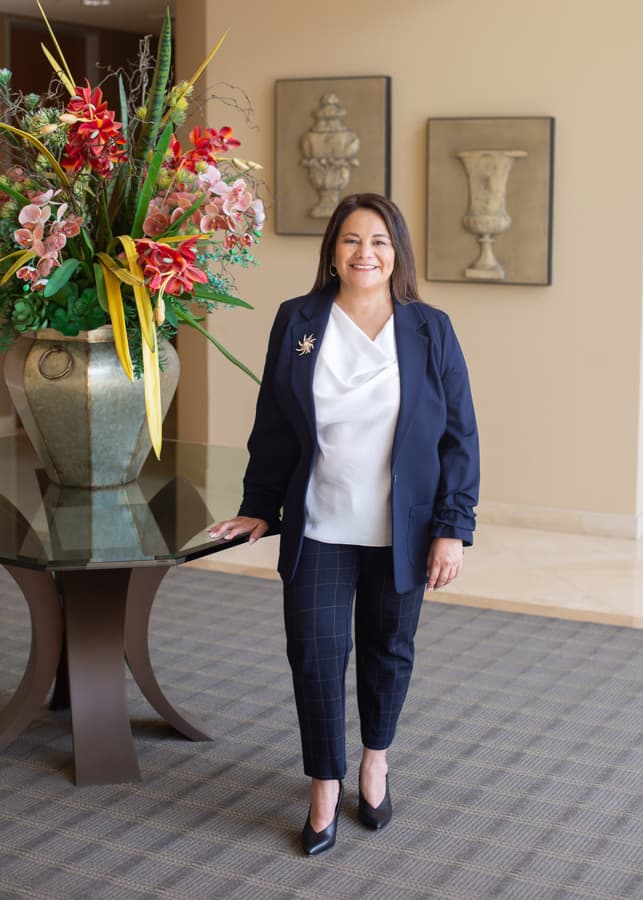
CBM Estate & Trust Law (Carmen B. Marquez, P.C.) helps California families design and implement practical plans—wills, funded living trusts, pour-over wills, and companion incapacity documents—with clear next steps after signing.
Free 60-minute consultation
Start with a free 60-minute consultation. Bring your questions about your home, your kids, and whether a will-only plan or a funded trust fits.
Book: /contact · Call: (805) 915-4793 · Email: Trusts@cbm.estate
MetLife Legal Plans
If your employer offers MetLife Legal Plans, you may be eligible to receive most estate planning services at no cost for yourself—and often for an eligible spouse and dependents under your plan. Coverage depends on your plan. MetLife members can upgrade to CBM’s Private Client package at a reduced rate for services beyond plan coverage. Mention MetLife when you book. Learn more: MetLife Legal Plans estate planning.
Offices in Simi Valley and Glendale
We serve families across Ventura County and Los Angeles County from:
- Simi Valley: 2655 First Street, Suite 110, Simi Valley, CA 93065
- Glendale: 655 N Central Ave, 17th Floor, Glendale, CA 91203
Local pages: Simi Valley estate planning attorney · Glendale estate planning attorney
Se habla español.
Prefer to learn in a group setting first? See our free Simi Valley seminars: /seminar-calendar.
About our firm: /about · Guides hub: /guides
FAQs
Does a will avoid probate in California?
Generally no. A will typically directs who inherits and who serves as executor, but assets that must pass under the will through court administration usually go through probate. Limited small-estate and summary procedures may apply in qualifying cases—check Courts Self-Help and form DE-300. Limits depend on date of death and change over time.
Do I need a living trust if I own a home in California?
Often it is worth a serious look. A solely owned California home frequently faces probate or a court petition if it is not in a trust or transferred another qualifying way. Affidavit limits for real property of small value are far below typical home values; the primary-residence petition under Probate Code §§13150–13157 is still a court process. Whether you need a trust depends on title, equity, and family goals—get advice for your facts.
What is the difference between a living trust and a will?
A will acts at death and generally does not avoid probate for probate assets. A revocable living trust can hold assets during life; a successor trustee can manage funded trust assets if you cannot, and after death those assets can often be administered without a full probate. Many Californians use both (trust + pour-over will) plus incapacity documents.
What is a pour-over will?
A pour-over will is a backup will used with a living trust. It sends leftover probate assets into your trust after death. It is not a substitute for funding the trust during life; poured-over assets may still require probate or another transfer process to reach the trust.
Can I have both a living trust and a will?
Yes. A common California plan is a funded revocable living trust plus a pour-over will, durable power of attorney, and advance health care directive.
What happens if my living trust is not fully funded?
Assets left in your individual name may still need probate or another transfer procedure, even though you signed a trust. Signing builds the safe; funding (retitling) puts the valuables inside—until then, an unfunded trust is like an empty safe or just paper. The pour-over will may catch leftover assets—but often through court. CBM helps Private Clients with funding after signing. See how to fund a California living trust and trust funding.
Is a living trust only for wealthy people?
No. California Courts Self-Help emphasizes that estate planning is not only for the wealthy, and living trusts are commonly discussed for homeowners. Home equity—not a high net worth label—is often the practical driver in California.
How do I decide which I need?
Book a free 60-minute consultation with CBM. We’ll talk through your home, accounts, family, and incapacity concerns—online comparisons can’t replace advice about your title and goals.
/contact · (805) 915-4793 · Trusts@cbm.estate
Next step
Choosing between a will-only plan and a funded living trust is one of the most important estate planning decisions California homeowners and parents make. We will help you compare options in plain English—and implement the plan you choose, including funding guidance.
Free 60-minute consultation
/contact · (805) 915-4793 · Trusts@cbm.estate
If your employer offers MetLife Legal Plans, you may be eligible to receive most estate planning services at no cost for yourself—and often for an eligible spouse and dependents under your plan. Coverage depends on your plan. MetLife members can upgrade to CBM’s Private Client package at a reduced rate for services beyond plan coverage. Mention MetLife when you book.
Simi Valley: 2655 First Street, Suite 110, Simi Valley, CA 93065
Glendale: 655 N Central Ave, 17th Floor, Glendale, CA 91203
Se habla español. · Free seminar calendar: /seminar-calendar
This guide is for general educational purposes about California law and practice as of the date above. It is not legal advice, does not create an attorney-client relationship, and may not reflect future statutory or form updates. Confirm small-estate amounts on DE-300 and consult an attorney about your circumstances.