
How to Talk to Your Aging Parents About Their Estate Plan (California Family Guide)
Educational guide for California families. This article is general educational information, not legal advice. Every family and every plan is different. Your parent should talk with a California estate planning attorney about their own situation.
As of: November 2, 2026 (PT).
At a glance
- An adult child can help gather information and set up the meeting, but the attorney's client is your parent, and your parent should meet with the attorney privately for at least part of the appointment.
- If a parent loses the ability to manage money or make medical decisions and has no durable power of attorney or advance health care directive, the family may need a court to appoint a conservator (Probate Code §1800 and following).
- California law presumes adults have the capacity to make their own decisions (Probate Code §810(a)), and a diagnosis alone does not mean a person lacks capacity (§810(b)).
- A trust only controls what is titled in it.
- What not to say: avoid "Who gets the house?", avoid pushing a deadline, and avoid suggesting changes that benefit you.
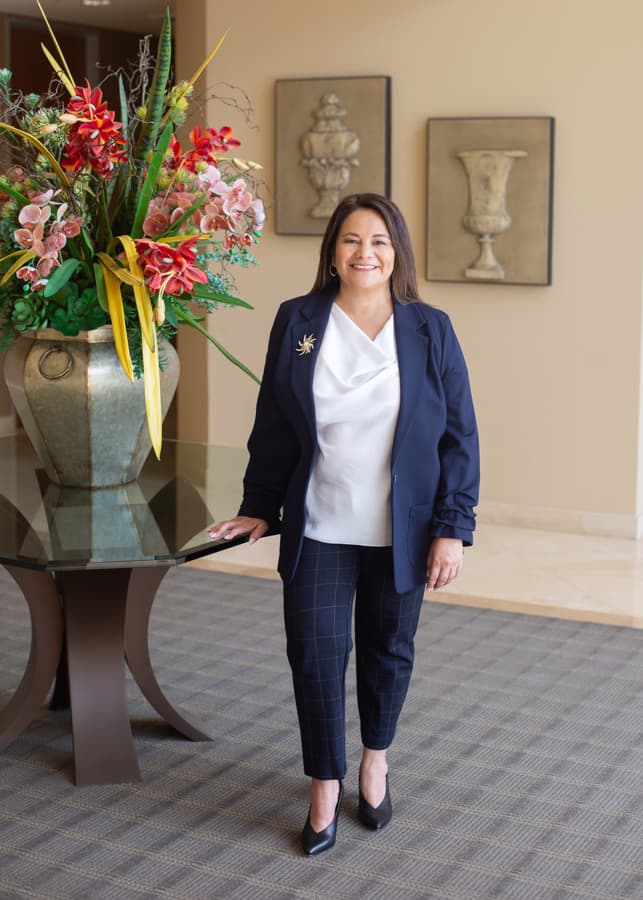
- Attorney Carmen B. Marquez speaks Spanish, so parents can talk through their plan in the language they are most comfortable with.

On this page
- At a glance
- Quick answer: how do you start the conversation?
- Why does this conversation matter before a crisis?
- How do you bring it up?
- What 10 questions should you ask your parents?
- How do you respect your parent's choices?
- What warning signs mean you should act now?
- What if your parents live far away or speak Spanish at home?
- How can CBM help?
- Can an adult child join the free 60-minute consultation?
- Related guides
- Frequently asked questions
- What sources does this guide rely on?
- Next step
Quick answer: how do you start the conversation?
Short answer: Pick a calm, private moment, not a crisis, and lead with care, not money: "I want to make sure we know what you want if something happens." Ask whether your parents have a trust or will, a durable power of attorney, and an advance health care directive, and where the originals are. Offer help and suggest an attorney meeting.
Five steps
- Choose the time: a quiet visit or a walk, not the middle of a holiday dinner.
- Lead with their wishes: the goal is to carry out what they want.
- Ask, then listen: start with where documents are, not who gets what.
- Offer practical help: gathering papers, booking a meeting, driving them there.
- Bring in a professional: an attorney meets with your parent, who is the client.
Why does this conversation matter before a crisis?
If a parent loses the ability to manage money or make medical decisions and has no durable power of attorney or advance health care directive, the family may need a court to appoint a conservator (Probate Code §1800 and following). Having these documents in place may help avoid a conservatorship. A properly funded living trust may help avoid probate for the assets titled in it.
Talking early also means your parent is the one deciding. California law presumes adults have the capacity to make their own decisions (Probate Code §810(a)), and a diagnosis alone does not mean a person lacks capacity (§810(b)). The best time to plan is while that is clearly true.
How do you bring it up?
Sample openers
- "I just helped a friend whose dad got sick. They could not find anything. Can we make sure that never happens to us?"
- "I updated my own will this year. Have you looked at yours lately?"
- "If you were in the hospital, who would you want talking to the doctors?"
- "I do not need to know the numbers. I just want to know where things are and who you picked."
At a holiday gathering: use the time together to set a date for a private follow-up, rather than having the full conversation at the table. Include siblings so no one feels left out.
What not to say: avoid "Who gets the house?", avoid pushing a deadline, and avoid suggesting changes that benefit you. If siblings disagree, keep the focus on your parent's wishes.
What 10 questions should you ask your parents?
1. Do you have a will or a living trust, and when was it last updated?
Plans signed many years ago may name people who have died or moved, or may not reflect current law. See living trust vs. will in California.
2. Is the house actually in the trust?
A trust only controls what is titled in it. Ask whether the deed was transferred to the trustee. See how to fund a living trust, AB 2016 and the $750,000 home petition, and TOD deed vs. living trust.
3. Who is your successor trustee and your power of attorney agent?
These are the people who would step in on money matters. See how to choose a successor trustee and successor trustee vs. power of attorney. California's optional statutory power of attorney form in Probate Code §4401 changes on January 1, 2027; see California's new power of attorney form.
4. Do you have an advance health care directive, and who is your health care agent?
California's optional statutory form is in Probate Code §4701. See durable power of attorney and advance health care directive and living will vs. living trust.
5. Where are the originals, and who has copies?
Agree on one place, and make sure the people named know where it is.
6. Who are your beneficiaries on retirement accounts, life insurance, and TOD accounts?
These assets usually pass to the named beneficiary, not under the will or trust. An attorney can review the designations so they fit the plan.
7. Have you thought about long-term care and Medi-Cal?
See Medicare vs. Medi-Cal for nursing home care and the Medi-Cal look-back and asset rules.
8. Any property tax plans for the family home?
If a child may keep the home, read about Prop 19 and the parent child exclusion.
9. Who are your doctors, advisors, and account contacts?
A simple list of names and phone numbers (doctors, CPA, financial advisor, insurance agent) saves your family days of searching.
10. What matters most to you?
Ask about care preferences, where they want to live, and any wishes for family members. The documents should reflect these answers.
How do you respect your parent's choices?
It is their plan. An adult child can help gather information and set up the meeting, but the attorney's client is your parent, and your parent should meet with the attorney privately for at least part of the appointment.
Two legal ideas explain why. Capacity: under Probate Code §812, a person has capacity to make a decision when they can communicate it and understand its rights and responsibilities, probable consequences, and significant risks, benefits, and reasonable alternatives. Undue influence: Welfare and Institutions Code §15610.70 defines it as excessive persuasion that overcomes a person's free will and results in inequity, and lists factors such as the person's vulnerability and the influencer's tactics. Letting your parent speak for themselves keeps the plan theirs.
What warning signs mean you should act now?
Under Welfare and Institutions Code §15610.30, financial abuse of an elder includes taking or keeping an elder's property for a wrongful use or with intent to defraud, or by undue influence. Watch for:
- New "friends" or helpers who control access to your parent;
- Unexplained withdrawals, checks, or new credit cards;
- Sudden changes to a will, trust, deed, or beneficiary;
- Unpaid bills or shutoff notices despite enough income; and
- Pressure to sign documents quickly or in secret.
If you see these signs, contact your county APS office or law enforcement, and encourage your parent to meet with an attorney.
What if your parents live far away or speak Spanish at home?
CBM meets with clients throughout California remotely, at our Simi Valley office, or in Burbank by appointment. Attorney Carmen B. Marquez speaks Spanish, so parents can talk through their plan in the language they are most comfortable with. Free seminars are listed on the seminar calendar when scheduled; you can ask to be told when a date is ready.
How can CBM help?
CBM Estate & Trust Law prepares coordinated California estate plans, including a revocable living trust, pour-over will, durable power of attorney, and advance health care directive, and reviews beneficiary designations so they fit the plan. Coordinated incapacity documents may help avoid a court conservatorship, and a properly funded trust may help avoid probate for the assets titled in it. Attorney Carmen B. Marquez has practiced estate planning in California since 2001, and Carmen B. Marquez, P.C. (CBM Estate & Trust Law) was founded in 2012. Learn more on our elder law page. We do not handle probate matters.
CBM Estate & Trust Law accepts MetLife Legal Plans for most estate planning services, including coverage for a spouse and dependents where the plan includes it (specific coverage depends on your employer's plan; Private Clients can add uncovered services). MetLife members can also upgrade to CBM's Private Client package at a reduced rate if they want services beyond what's covered. Mention MetLife when booking. CBM also accepts ARAG legal plan members.
Can an adult child join the free 60-minute consultation?
Your parent attends the consultation. An adult child may join with the parent's permission.
Related guides
- Living trust vs. will in California
- California durable power of attorney and advance health care directive
- California's new power of attorney form for 2027
- How to choose a successor trustee in California
- Medicare vs. Medi-Cal for nursing home care in California
- Elder law services
Frequently asked questions
How do I bring up estate planning with my parents without sounding greedy?
Focus on their wishes and their care, not on what anyone inherits. Try saying that you want to know who they picked and where their papers are so you can follow their wishes. Ask questions, listen, and offer practical help such as gathering documents or booking a meeting.
What documents should my aging parents have in California?
Many California plans include a revocable living trust, a pour-over will, a durable power of attorney for finances, and an advance health care directive. Beneficiary designations on retirement accounts and life insurance should also be reviewed so they fit the plan. An attorney can tell your parent what fits their situation.
How do I find out if my parents have a living trust?
Ask them directly, and ask where the original is kept. You can also look for a binder from an attorney, a deed showing the home held by a trustee, or bank statements in the name of a trust. If your parent agrees, they can contact the attorney who prepared it.
Can I make an estate plan for my parent?
No. Your parent must make their own plan while they have capacity to do so. You can help gather information, schedule the meeting, and provide transportation, but the attorney's client is your parent, and your parent decides what the documents say.
What if my parent refuses to talk about it?
Do not force it. Try again later, try a different opener, or share a short article. Some parents are more comfortable talking with a neutral professional than with their children. Let them know you are ready to help whenever they are.
What happens if my parent loses capacity without a power of attorney?
If there is no durable power of attorney or advance health care directive, the family may need to ask a court to appoint a conservator to manage finances or personal care. Having these documents in place while your parent has capacity may help avoid a conservatorship.
Can I come to my parent's appointment?
Often yes, with your parent's permission. The attorney will usually also want to speak with your parent privately for part of the meeting, because your parent is the client and the plan must reflect their own wishes.
Is the consultation available in Spanish?
Yes. Attorney Carmen B. Marquez speaks Spanish, and the free 60-minute consultation can be held in Spanish.
What sources does this guide rely on?
Verified on leginfo.legislature.ca.gov on November 2, 2026, except where noted. See the companion SOURCES file.
- Probate Code §810 and §812 (legal mental capacity).
- Welfare and Institutions Code §15610.30 (financial abuse) and §15610.70 (undue influence).
- Probate Code §1810 (conservatorship, Part 3 beginning at §1800).
- Probate Code §4701 (statutory advance health care directive form; verified October 26, 2026) and AB 2199 (new §4401 form from January 1, 2027).
Next step
Book a free 60-minute consultation · /contact · (805) 915-4793 · Trusts@cbm.estate
Related: MetLife Legal Plans · Elder law · Seminar calendar
Serving families throughout California, with an office in Simi Valley and meetings in Burbank by appointment.
Simi Valley: 2655 First Street, Suite 110, Simi Valley, CA 93065
Burbank (meetings by appointment): 3500 West Olive Avenue, 3rd Floor, Burbank, CA 91505
La abogada Carmen B. Marquez habla español. · Guides hub: /guides
Attorney advertising. This guide is general information about California law as of the date above, not legal advice. It does not create an attorney-client relationship and may not reflect later changes in the law. Consult a California attorney about your situation before you act. Results depend on your facts; no outcome is guaranteed. CBM Estate & Trust Law (Carmen B. Marquez, P.C.) practices in California only. We do not handle probate matters.