
Tax Returns After a Death in California: What a Successor Trustee Files (Final 1040, Trust 1041 and 541, K-1s)
Educational guide for California successor trustees. This article is general educational information, not legal or tax advice. CBM Estate & Trust Law does not prepare tax returns. Work with a CPA or enrolled agent on every return, election, and deadline described here.
As of: November 16, 2026 (PT). Tax forms, thresholds, and dates change each year. The IRS and FTB had not yet posted their 2026 instructions on this date, so dates below follow the rules in the current (2025) instructions.
At a glance
- After a death there are usually the decedent's final Form 1040 and California Form 540, then the trust's Form 1041 and Form 541, with Schedules K-1.
- Federal estate tax Form 706 applies only to larger estates or when a family elects portability.
- A CPA usually prepares these returns. CBM does not prepare tax returns.
- A revocable trust that becomes irrevocable generally needs a new employer identification number.
- A calendar-year trust files Form 1041 by the 15th day of the 4th month after the tax year ends.
- Keep a reserve before distributing. Trust property can be reached for the decedent's debts and expenses when the probate estate is not enough.

On this page
- At a glance
- Quick answer: what tax returns does a successor trustee deal with?
- What are the decedent's final personal returns (Form 1040 and Form 540)?
- When does the trust become its own taxpayer, and how do you get an EIN?
- When must a trust file Form 1041 and California Form 541?
- How do K-1s pass income to beneficiaries?
- What is a step-up in basis, and why does the date-of-death appraisal matter?
- Does a federal estate tax return apply?
- What is the deadlines calendar for a 2026 death?
- Which trustee duties connect to taxes?
- How can CBM help successor trustees?
- Related guides
- Frequently asked questions
- What sources does this guide rely on?
- Next step
Quick answer: what tax returns does a successor trustee deal with?
Short answer: After a death, there are usually the decedent's final returns (federal Form 1040 and California Form 540), then the trust's own returns once it becomes irrevocable (Form 1041 and California Form 541), with Schedules K-1 to beneficiaries who receive distributions. Federal estate tax Form 706 applies only to larger estates or to elect portability. A CPA usually prepares these returns.
The successor trustee's job is to make sure each return is identified, assigned to the right person, calendared, and supported with good records.
What are the decedent's final personal returns (Form 1040 and Form 540)?
Who files and signs
According to IRS Publication 559, the decedent's personal representative files the final Form 1040 for the year of death and any earlier returns that were never filed. If a personal representative has been appointed, that person signs. If none has been appointed, a surviving spouse filing jointly signs and writes "Filing as surviving spouse." If there is no appointed representative and no surviving spouse, the person in charge of the decedent's property files and signs as "personal representative."
California follows a similar rule. Under Revenue and Taxation Code §18505.3, the decedent's California return is made by the executor, administrator, or other person charged with the decedent's property. The FTB says a final return is required if a return is normally required or if prior returns were not filed.
When there is a living trust and no probate, the successor trustee is often the person in charge of the decedent's property for this purpose. Confirm the signing role with your CPA.
Which year, and when it is due
The final return covers the decedent's income from January 1 through the date of death. Pub. 559 says the final return is due when the decedent's return would have been due, generally April 15 following the year of death, moved to the next business day if that date falls on a weekend or legal holiday. The FTB says the same for the final Form 540. For a death in 2026, that points to April 15, 2027, unless the IRS or FTB announces a different date or a disaster postponement.
A surviving spouse may be able to file a joint return for the year of death. In California, community property rules can affect how income is split (Pub. 559 notes this for community property states). That is a CPA question.
When does the trust become its own taxpayer, and how do you get an EIN?
While the settlor was alive, a revocable living trust is treated as a grantor type trust for tax purposes, so its income was usually reported on the settlor's own return. At death, the trust (or the part of it that becomes irrevocable) is a different taxpayer.
The IRS page "When to get a new EIN" says a trust needs a new EIN if it is "a revocable trust that changes to an irrevocable trust." You can apply online at IRS.gov/EIN or with Form SS-4. Banks and brokerage firms will ask for the trust's EIN when you retitle accounts. Do not use the decedent's Social Security number for income after death.
Many trustees also file IRS Form 56, which the IRS describes as a way to notify it of the creation or termination of a fiduciary relationship. For the first steps in order, see trust administration: the first 60 days.
When must a trust file Form 1041 and California Form 541?
Federal Form 1041
Under the IRS Instructions for Form 1041, the trustee must file Form 1041 for a domestic trust that has any taxable income for the year, gross income of $600 or more (regardless of taxable income), or a beneficiary who is a nonresident alien.
For a calendar-year trust, Form 1041 and the Schedules K-1 are due by the 15th day of the 4th month after the year ends, which is April 15 for a calendar year, moved to the next business day for a weekend or holiday. For trust income earned in 2026 after the death, that points to April 15, 2027. Form 7004 gives an automatic 5½-month extension of time to file, per the IRS instructions.
California Form 541
Under the FTB's Form 541 instructions, a trust must file Form 541 if it has gross income of more than $10,000 (regardless of net income), net income of more than $100, or an alternative minimum tax liability. The FTB also says not to file Form 541 if there are no California fiduciaries, no California noncontingent beneficiaries, and no California source income. Residency questions (a trustee or beneficiary outside California) belong with your CPA.
Form 541 is due by the 15th day of the 4th month after the close of the trust's taxable year (April 15 for a calendar year). The FTB allows an additional six months to file without a written request, but any tax owed must still be paid by the original due date to avoid late payment penalties.
The section 645 election and a fiscal year
Under Internal Revenue Code §645, as described in the Form 1041 instructions, the trustee of a qualified revocable trust and the executor (if any) can elect to treat the trust as part of the decedent's estate for income tax purposes. The election is made on Form 8855, generally by the due date of the first Form 1041 (including extensions), and once made it cannot be undone. If no Form 706 is required, the election period runs until 2 years after the date of death. During the election period, the filing trustee can choose a fiscal year. Whether the election helps is a CPA decision.
The IRS instructions also say that, for tax years ending before 2 years after the death, estimated tax payments are not required from a trust that was treated as owned by the decedent and that receives the residue of the estate under the will (or, if no will is admitted to probate, is primarily responsible for paying debts, taxes, and expenses). Ask your CPA whether your trust fits.
How do K-1s pass income to beneficiaries?
A trust is allowed an income distribution deduction for income it distributes to beneficiaries, limited by its distributable net income. In plain words, when trust income is distributed, the beneficiary, not the trust, generally reports and pays tax on that share. The trust reports each beneficiary's share on Schedule K-1 (Form 1041).
Per the IRS instructions, the trustee must give a Schedule K-1 to each beneficiary who receives a distribution of property or an allocation of an item, on or before the day the Form 1041 is due. The FTB requires a Schedule K-1 (541) for the same beneficiaries on the California side, and imposes a penalty for failing to provide one.
Beneficiaries often ask why they received a K-1 when they "only got their inheritance." The inheritance itself is generally not income, but income the trust earned and distributed can be.
What is a step-up in basis, and why does the date-of-death appraisal matter?
Under 26 U.S.C. §1014(a)(1), the basis of property acquired from a decedent is generally its fair market value at the date of death. Section 1014(b)(2) and (b)(3) treat property in a revocable trust as acquired from the decedent for this purpose. The IRS says the date-of-death value generally applies whether or not an estate tax return is filed, and that if inherited property sells for more than its basis, the gain is taxable.
For married couples, §1014(b)(6) can also adjust the basis of the surviving spouse's half of community property, if at least half of the community interest was included in the decedent's gross estate. Whether a particular asset qualifies is a CPA and attorney question.
This is why an appraisal of the home and other assets as of the date of death matters. It sets the starting point for any later sale. A sale soon after death can produce little or no gain, but only the numbers can tell you. If a child may keep the home, review Prop 19 and the parent child exclusion, which is a property tax rule, not an income tax rule.
Does a federal estate tax return apply?
Most estates do not file Form 706. The IRS says a return is required when the gross estate, plus adjusted taxable gifts and specific gift tax exemption, exceeds the filing threshold for the year of death: $15,000,000 for 2026. For deaths in 2027, the basic exclusion amount is $15,480,000 (IR-2026-133). The IRS adjusts these amounts each year.
A surviving spouse's family may still choose to file Form 706 to elect portability of the decedent's unused exclusion, which requires a timely filed return. Form 706 is due 9 months after the date of death, with an automatic 6-month extension of time to file available on Form 4768 (per the Form 706 instructions). For California's side, see California estate and inheritance tax.
What is the deadlines calendar for a 2026 death?
These dates follow the current IRS and FTB rules. Confirm each one with your CPA, and watch for IRS or FTB postponements.
- As soon as practical: obtain the trust's EIN; consider Form 56; open a trust account.
- Within 150 days after death: if the decedent owned California real property through the trust, the trustee files a change in ownership statement with the county recorder or assessor (Revenue and Taxation Code §480(b)). This is a property tax filing, not an income tax return.
- January and February 2027: collect Forms 1099 and W-2 issued to the decedent and to the trust.
- By April 15, 2027: the decedent's final 2026 Form 1040 and Form 540; for a calendar-year trust, the first Form 1041 and Form 541, with Schedules K-1. If a section 645 election and a fiscal year are used, the trust's dates will differ.
- By the first Form 1041 due date (with extensions): Form 8855, if the section 645 election is made.
- 9 months after death: Form 706, if required or if electing portability.
- Each later year: Form 1041 and Form 541 for as long as the trust remains open and meets the filing tests.
Which trustee duties connect to taxes?
- Keep trust money separate. Probate Code §16009 requires a trustee to keep trust property separate from other property and to designate it as trust property. One trust account makes the returns far easier.
- Keep beneficiaries informed. Under §16060, a trustee must keep beneficiaries reasonably informed. Under §16062, a trustee generally must account at least annually, at termination, and on a change of trustee, subject to exceptions; §16063 lists what an account contains.
- Hold a reserve before distributing. Under §19001, property that was in the revocable trust can be reached for the decedent's debts and expenses to the extent the probate estate is not enough. Under §16061.9(c), a trustee may consider whether the contest period has run when timing distributions. Many trustees keep a reserve until the final returns are filed and accepted.
- Ask about a prompt assessment. Pub. 559 says the IRS ordinarily has 3 years to assess additional tax, and that a personal representative may request a prompt assessment of the decedent's returns, which shortens that period to 18 months from the IRS's receipt of the request (Form 4810). Your CPA can say whether that fits.
For the full list of a trustee's jobs, see the California successor trustee checklist and how to choose a successor trustee.
How can CBM help successor trustees?
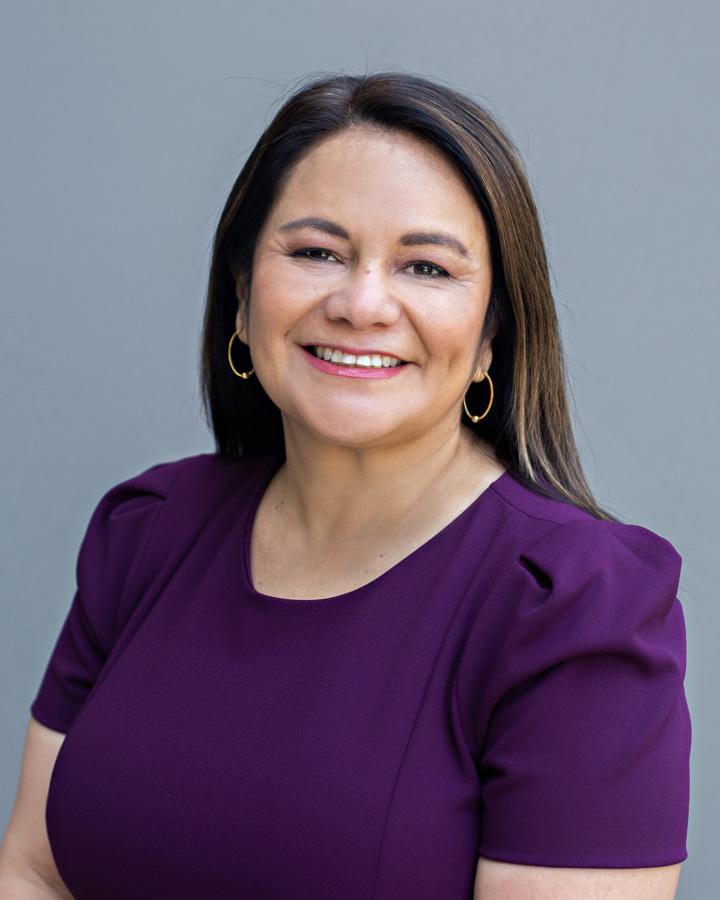
CBM Estate & Trust Law supports California successor trustees through trust administration: reading the trust, serving required notices, organizing assets and records, and coordinating with your CPA so returns and distributions happen in the right order. CBM does not prepare tax returns. Attorney Carmen B. Marquez has practiced estate planning in California since 2001 (20+ years), and Carmen B. Marquez, P.C. (CBM Estate & Trust Law) was founded in 2012. La abogada Carmen B. Marquez habla español. Trust administration is not probate. We do not handle probate matters.
Related guides
- How long does trust administration take in California?
- Trust administration in California: the first 60 days
- California successor trustee checklist
- How to choose a successor trustee in California
- Selling a house in a trust after death in California
- Certification of trust in California
- California estate and inheritance tax
- Proposition 19 parent-child exclusion
- Trust administration services
Frequently asked questions
Who files a deceased parent's final tax return in California?
The personal representative files the final federal Form 1040, and California's rule is similar for Form 540. If no one has been appointed and there is no surviving spouse filing jointly, the IRS says the person in charge of the decedent's property files and signs as personal representative. With a living trust, that is often the successor trustee. Confirm with a CPA.
Does a living trust need its own tax ID number after the trustmaker dies?
Usually yes. The IRS says a revocable trust that changes to an irrevocable trust needs a new EIN. You can apply online or with Form SS-4. Use the trust's EIN, not the decedent's Social Security number, for income earned after death.
When does a trust have to file Form 1041?
Under the IRS instructions, a domestic trust must file Form 1041 if it has any taxable income, gross income of $600 or more, or a nonresident alien beneficiary. For a calendar-year trust, it is due by April 15 of the following year, moved to the next business day for a weekend or holiday.
Does California require a trust tax return (Form 541)?
Often. The FTB requires Form 541 for a trust with gross income over $10,000, net income over $100, or an alternative minimum tax liability, unless there are no California fiduciaries, noncontingent beneficiaries, or California source income. Any tax due must be paid by the original due date.
What is a K-1 and will I get one as a beneficiary?
A Schedule K-1 reports your share of the trust's income, deductions, and credits. The trustee must provide one to each beneficiary who receives a distribution or an allocation of an item, by the Form 1041 due date. California uses Schedule K-1 (541) for the state return.
Do beneficiaries pay income tax on what they inherit from a trust?
Generally not on the inheritance itself. The FTB says a gift or inheritance is not included in income, but income it later produces is. A beneficiary may owe tax on trust income distributed to them, reported on a K-1, and on any gain if inherited property is later sold for more than its basis.
What is a step-up in basis?
Under federal tax law, property acquired from a decedent, including property in a revocable trust, generally takes a basis equal to its fair market value at the date of death. That can reduce taxable gain on a later sale. A date-of-death appraisal documents the value. A CPA can confirm how it applies.
Can the successor trustee be personally liable for unpaid taxes?
It can happen, especially if trust assets are distributed before taxes are paid. IRS Publication 559 says a personal representative is responsible for additional taxes that may be due. Keeping a reserve, filing on time, and asking a CPA about a prompt assessment request can lower that risk.
What sources does this guide rely on?
IRS and FTB pages and California statutes verified on irs.gov, ftb.ca.gov, and leginfo.legislature.ca.gov on November 16, 2026. See the companion SOURCES file.
- IRS: Instructions for Form 1041, Publication 559, When to get a new EIN, About Form 56, Estate tax, Instructions for Form 706, IR-2026-133, Gifts and inheritances FAQ.
- 26 U.S.C. §1014 (basis of property acquired from a decedent).
- FTB: Form 541 instructions, Deceased person, Gifts and inheritance.
- Revenue and Taxation Code §18505.3 and §480.
- Probate Code §16009, §16060, §16061.9, §16062, §16063, §19001.
Next step
If you have just taken over a parent's trust, a short meeting can map out the notices, records, and handoffs to your CPA.
Book a complimentary consultation · /contact · (805) 915-5652 · Trusts@cbm.estate
Related: Trust administration · Successor trustee vs. power of attorney · Glossary
Serving families throughout California, with an office in Simi Valley and meetings in Burbank by appointment.
Simi Valley: 2655 First Street, Suite 110, Simi Valley, CA 93065
La abogada Carmen B. Marquez habla español. · Guides hub: /guides
Attorney advertising. This guide is general information about California law as of the date above, not legal or tax advice. It does not create an attorney-client relationship and may not reflect later changes in the law. Consult a California attorney and a qualified tax professional about your situation before you act. Results depend on your facts; no outcome is guaranteed. CBM Estate & Trust Law (Carmen B. Marquez, P.C.) practices in California only and does not prepare tax returns. We do not handle probate matters.